

This content is intended for general informational purposes only.
In today’s business world, information is often more valuable than cash. That’s because certain information has the power to provide a competitive edge and positively impact the bottom line for years to come. So it’s not surprising that business owners want to protect that information with a nondisclosure agreement (NDA).
Having employees sign an NDA can go a long way toward keeping confidential information inside the company. But what if you suspect an employee has used private communications to share proprietary information with unauthorized parties? Does an NDA extend to confidential private messages? Two legal experts help answer this question below.
Send my document for signature
File type is not allowed.
Maximum file size limit exceeded. (5MB)
Something went wrong.
Does an NDA extend to confidential private messages?
“First, it depends a lot on the terms of the NDA,” says Ryan Reiffert, a business attorney based in San Antonio, Texas.
NDAs, like many other contracts, can contain a wide array of provisions. If the NDA stipulates that the employer has a right to access private communications and the employee willingly signs it, then the employer may be able to review private communications on demand — assuming no state law exists that supersedes the NDA’s terms.
Second, Reiffert recommends you look at the employment laws of your state. The NDA may not have any provisions that afford the employer on-demand review of private messages, but if you operate in an at-will employment state — meaning that, absent contractual provisions, or specific laws to the contrary an employer can terminate an employee at will and without cause — an employer can demand to see the communications.
“If the employee declines, the employer can simply terminate them,” Reiffert says.
Robert Odell, employment attorney and managing partner at Odell Law, says that there’s rarely a case where an employer has a legal right to inspect an employee’s private communications. Specifically, he references text messages since they are one of the most common methods of communication.
“The only exception would be if the texts are on a company-owned phone or device and the company has issued a privacy notice advising the employee that the phone communications are monitored and/or the company has the right to inspect them,” Odell explains.
Of course, an employer might simply request to review the texts under threat of termination, as Reiffert explained above. However, Odell notes that this act can form the basis of a wrongful termination claim if the employee refuses based on their right to privacy under some state laws.
“For example, the California and U.S. Constitutions grant all citizens a right to privacy that cannot be infringed upon except for limited circumstances that are justified by compelling interests and a careful legal balancing test,” Odell explains. “Employers can sometimes overcome those interests in limited circumstances that usually involve health and safety — for example, drug testing all new employees in the interest of workplace safety.”
Odell says an employer may argue that they have a “compelling interest in determining whether the NDA has been breached,” but he is not aware of any legal precedent supporting that argument as a legitimate basis to overcome an employee’s right to privacy. “I would argue that position does not [have a legal basis], as the interest is very narrow and only involves the company’s own peace of mind rather than a broader benefit to the workforce or the public.”
Pro Tip
Easily create customized nondisclosure agreements with Jotform’s AI Document Generator in minutes!
Considering a different perspective
Odell shares another common employment-related use case for NDAs: an employee signing the contract as part of a post-termination settlement or severance agreement. “In this case, the employer has zero right to inspect the former employee’s private communications, unless that is something the parties specifically agreed to in the terms of the NDA. But I’ve never seen that before.”
If someone notifies the employer that an employee or former employee has breached an NDA, or the employer suspects such a breach, the agreement itself usually spells out what the employer can do. Most commonly, the agreement may allow the employer to file an immediate injunction or other equitable relief to stop the breach from occurring.
NDAs are a great resource for protecting confidential information, but they have limits. Be sure you use a clearly defined NDA template to minimize the chance of an information leak by employees. It also helps to have legal assistance available should you need to take appropriate recourse against an employee who you think has violated an NDA.
Get your NDAs signed quickly and easily with Jotform Sign
Assuming relevant legality, you can include specific terms in your NDA to indicate whether private messages are on the table as far as employee communications are concerned. But even with this language, the NDA won’t be enforceable until employees sign it. This will indicate their understanding and agreement.
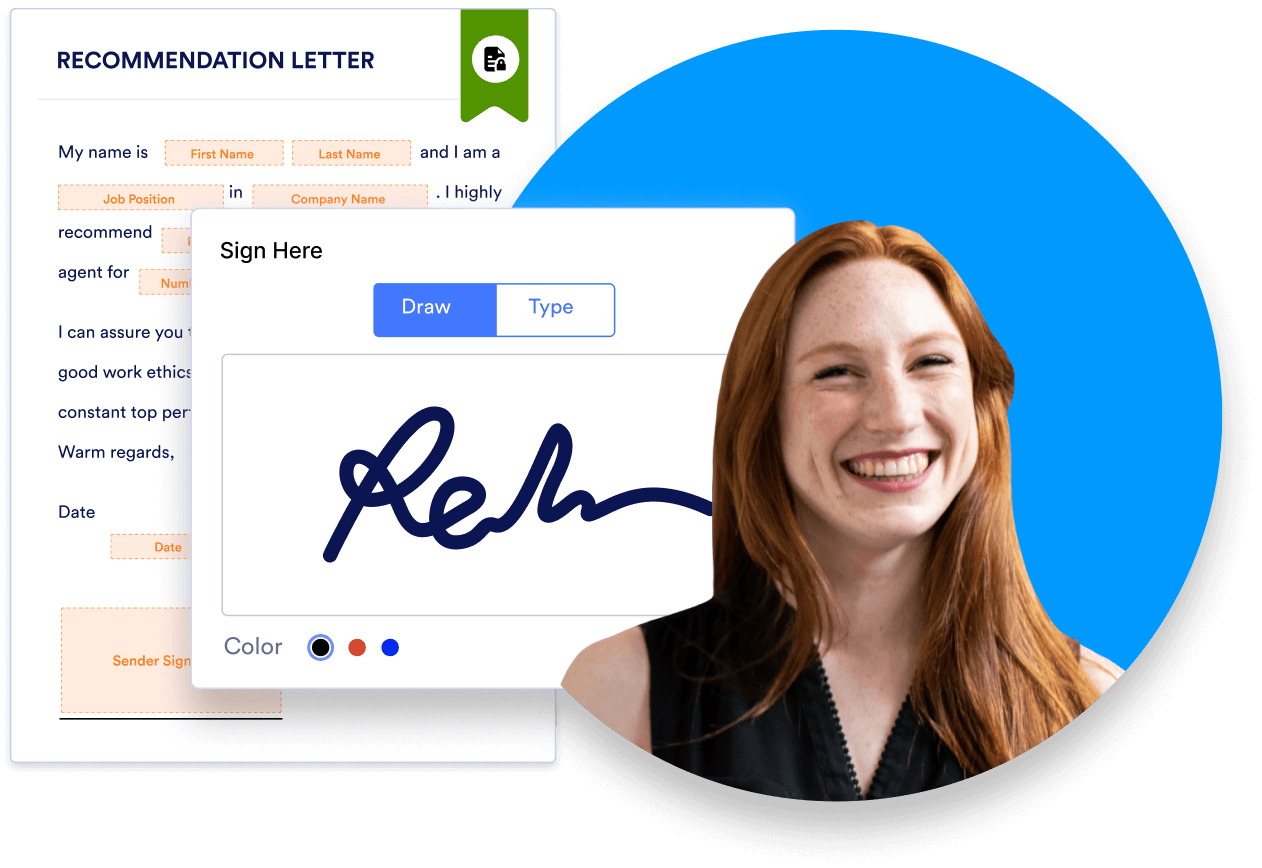
To make the signing experience as seamless as possible, especially in the hustle and bustle of onboarding, try Jotform Sign, an easy-to-use e-signature solution designed especially for small and mid-sized businesses.
Using Jotform Sign, you can gather signatures from anywhere, which is useful if your company operates remotely or has remote positions. Simply send your document to signers via email or share a link, collect the necessary signatures quickly, and get instant notifications when signing is complete. The entire signature process can be automated from beginning to end, to create a seamless approval workflow.
Have a PDF of an agreement you’ve already put together? Simply upload it into Jotform Sign and turn it into an e-sign document. Or, take advantage of one of our 600+ customizable templates to create a new agreement.
Our agreement templates include:
- Nondisclosure agreements. Hiring a designer or engineer to consult on product development? To do their job effectively, they’ll need to review important intellectual property. If that information leaks, it could threaten your competitive advantage in the market. Use this template to help protect yourself — it includes standard fields for identifying the parties of the contract, boilerplate legal verbiage, and signatures.
- Confidentiality agreements. In some cases, a confidentiality agreement may be more fitting than an NDA. If you’re not sure how these two agreements differ, check out this article that notes important distinctions between the two. Assuming a confidentiality agreement is more appropriate for your situation, this foundational template includes boilerplate language to help for protecting and disclosing confidential information, along with fields to enter the date, contract name, party names and addresses, and e-signatures.
- Employee confidentiality agreements. Every time you hire a new employee, you face an increased risk of intellectual property leaking to competitors or the public. You can help mitigate the risk with this template, which sets the parameters around acceptable use of company information and gives you recourse should they breach the agreement.
You can customize each of these templates with Jotform’s simple, drag-and-drop interface. Add as many fields as you need, alter or add verbiage to suit your specific use case, mold the look with your own branding, and more. Build a document once and send it as many times as needed. Get started with a free confidentiality agreement template today.
This article is for business owners, HR leaders, and operations managers who use NDAs to protect sensitive company information and want to understand where privacy boundaries start and end, especially around texts, DMs, and other “private” messages.
AS ALWAYS, CONSULT AN ATTORNEY BEFORE RELYING ON ANY INFORMATION ON THIS PAGE. THE CONTENT ABOVE IS FOR INFORMATIONAL PURPOSES ONLY. JOTFORM IS NOT PROVIDING LEGAL, FINANCIAL OR OTHER ADVICE.








Send Comment: