

Best CoSchedule alternatives
You’re not here because CoSchedule is terrible. You’re here because it’s not enough.
You’ve got blog posts in review, social posts half-written, design requests buried in Slack threads, and a product launch creeping up. And somehow…it’s all still sitting in a calendar.
That’s the problem.
A calendar shows you what’s supposed to happen, but it doesn’t manage how you actually get it done.
And when the work starts slipping through the cracks — missed deadlines, confused teammates, forgotten approvals — it’s a system issue. At the time of this writing, CoSchedule offers a free-forever plan, plus paid self-serve plans like Social Calendar ($19 per user per month billed annually) and Agency Calendar ($59 per user per month billed annually), with custom-priced plans for larger teams.
But if you’ve outgrown boxes on a screen, it might be time to switch. Let’s find a CoSchedule alternative that works the way you do.
How we put together this list
We focused on tools you can use to plan, execute, and adapt in real time. Here’s what we compared:
| Area | The question we asked |
|---|---|
| Planning | Can you see what’s happening and when? |
| Execution | Can you assign work and keep it moving? |
| Collaboration | Can your team give feedback without chasing each other? |
| Reporting | Do you know what’s working after you publish? |
| Integration | Does it play well with the tools you already use? |
| Pricing | Are you getting real value for what you’re paying? |
And here’s what we found.
12 best CoSchedule alternatives to try in 2025
We promise the deep dives are worth a read, but if you want to skip ahead, here’s the TL;DR version:
 Buffer |  SproutSocial |  Airtable |  Loomly |  Hootsuite |  monday.com |  Zoho Social |  Kontentino |  SocialPilot |  Agorapulse |  Sendible |  Later | |
|---|---|---|---|---|---|---|---|---|---|---|---|---|
| Best for | Simple, fuss-free social scheduling | Enterprise-level social operations | Flexible editorial and content operations | Collaborative social approvals | Teams scaling multi-channel social | Visual, low-code project management | Budget-friendly multi-brand monitoring | Agency approvals and visual previews | Bulk posting across many profiles | Reporting for growing brands | Client dashboards and white-label reports | Visual planners who need a grid preview |
| Standout feature | Channel-based queues + AI captions | Smart Inbox + listening and deep reports | Spreadsheet feel, database power (linked records) | Per-platform post mockups + approval flows | “Best Time to Publish” recommendations | Automations + multiple board views | Facebook Lead Ads/Form sync + brand workspaces | Client-friendly previews + “Time Savers” bulk actions | 500-post bulk scheduler | Unified Social Inbox + advanced reports | Unlimited scheduling + client views | Instagram grid and feed preview + media library |
| Starting price* | $5 per month per channel | $199 per seat per month | $20 per user per month | $32 per month | $99 per seat per month | $9 per user per month | $10 per brand per month | $39 per month | ~$30 per month | $79 per seat per month | $25 per month | $18.75 per month |
| Free plan/trial? | Free plan: Yes; Trial: 14-day | Free plan: No; Trial: 30-day | Free plan: Yes; Trial: No | Free plan: No; Trial: 15-day | Free plan: No; Trial: 30-day | Free plan: Yes (2 seats); Trial: 14-day | Free plan: Yes; Trial: 15-day | Free plan: No; Trial: 14-day | Free plan: No; Trial: 14-day | Free plan: No; Trial: 30-day | Free plan: No; Trial: 14-day | Free plan: Yes; Trial: 14-day |
*Starting prices listed are billed annually.
1. Buffer: Best for lightweight multichannel planning
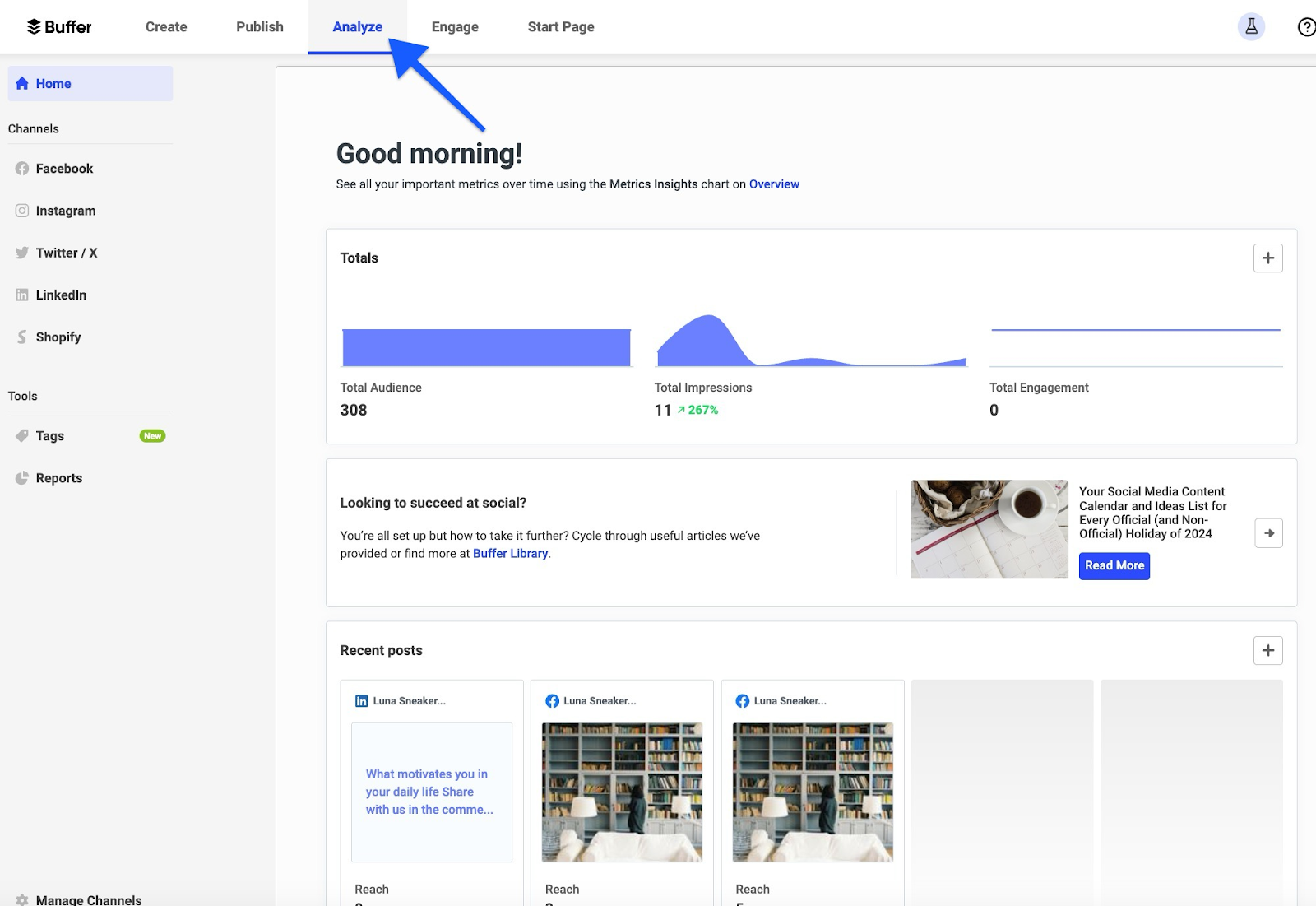
Buffer is an easy-to-use social media management platform built for publishing content across top channels like Facebook, Instagram, LinkedIn, Pinterest, X (formerly Twitter), and more. It shows you when your audience is most active, so you can schedule smarter and stay consistent.
You can plan content in a visual calendar, queue posts per channel, and publish directly from the browser extension. It has an AI assistant for suggesting content and writing captions, while paid plans unlock analytics, collaboration tools, and an engagement inbox for replying to comments.
Key features:
- Queue view and calendar view to plan content in advance
- AI Assistant (idea inspiration, content suggestions) included in all plans
- Engagement inbox and basic analytics in lower tiers; advanced analytics and reporting in higher and Team plan
- Collaboration tools (team members, approvals, drafts) available on higher plans
Pros:
- The free plan is generous enough for individuals or small brands to manage multiple platforms without paying upfront.
- Buffer’s interface is clean and intuitive, making it easy to get started without a steep learning curve.
Cons:
- The sunsetting of image creation tools (Pablo, Stories, Remix) means you’ll need external tools for graphics.
- The free and lower-tier plans offer limited analytics and no team collaboration features, which can limit you as your team grows.
Plans/Pricing:
Free for three channels, 10 posts; paid plans from $5 per channel per month with advanced features.
G2 rating: 4.3/5
Already using Buffer? Check out our complete guide to the best Buffer alternatives to expand your pool of options.
2. SproutSocial: Best for teams managing high-volume social
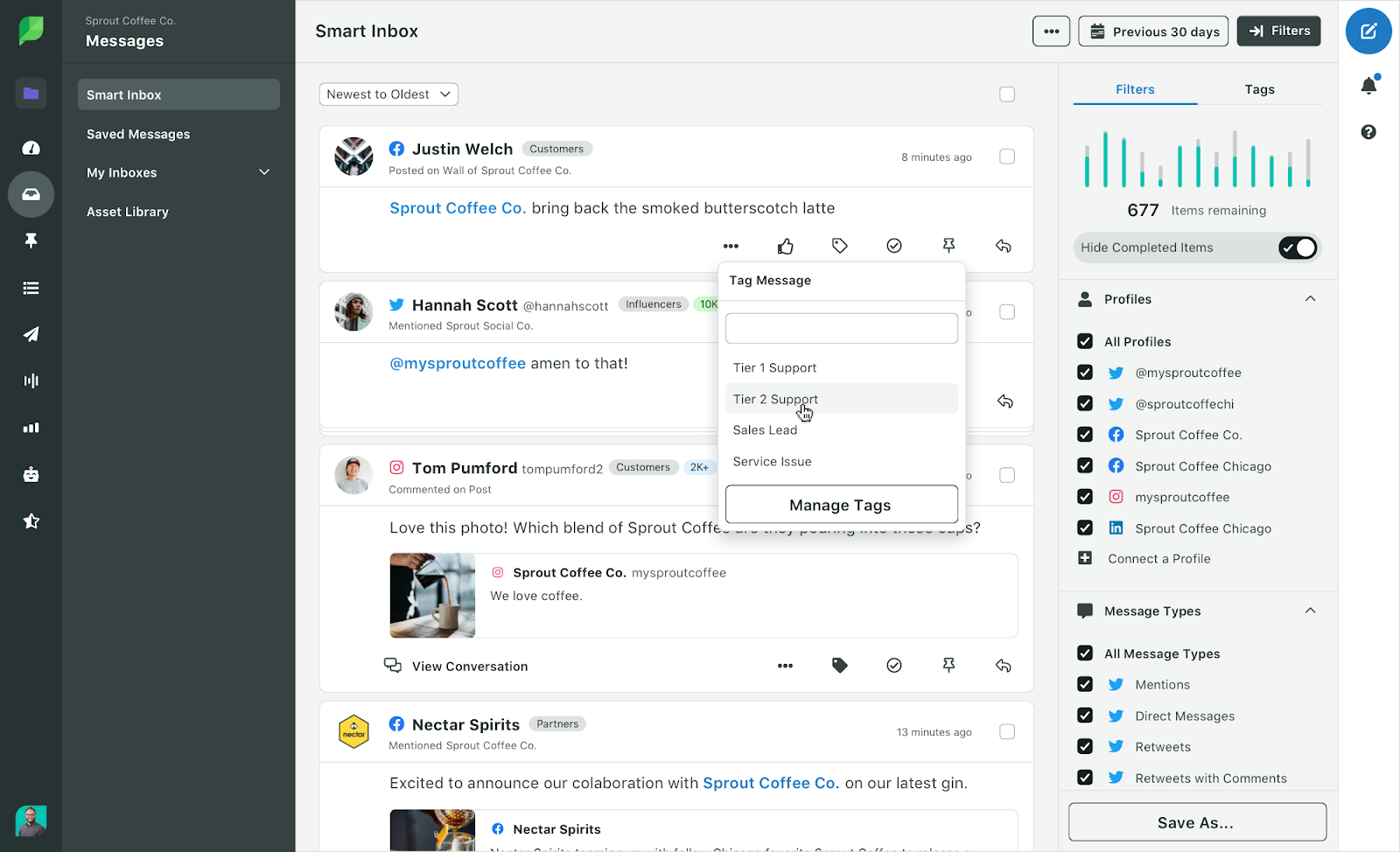
Sprout Social is a full-featured social media management platform built for teams who want to publish, engage, listen, and analyze — without bouncing between tools. The platform supports detailed reporting, social listening (in the form of keywords, hashtags, and sentiment), unified inboxes, content calendars, and workflow options like approvals and assignable tasks.
You get a shared Inbox view (Smart Inbox) where messages from all connected platforms are collected, filtered, and routed. You plan content in a Calendar view; reviews and assets can be managed in an Asset Library.
Key features:
- Smart Inbox to monitor and respond to messages, comments, and reviews across all profiles in one place
- Publishing calendar and scheduling with approval workflows and content assets library
- Social listening to track brand keywords, hashtags, sentiment, and trends
- Detailed analytics and reporting, including engagement metrics, team performance, case metrics, and competitive insights
- Ability to assign tasks, manage drafts and approvals, shared assets
- Integrations with major social platforms, plus external tools (e.g., asset storage, analytics) and mobile apps
Pros:
- Sprout Social gives you tools for both sides of social: publishing, listening, and engagement, so you’re not blind to what people are saying.
- The workflows (approvals, shared assets, and smart inbox routing) help large teams keep things consistent.
Cons:
- Pricing is steep and charged per user, which adds up fast for growing teams.
- The platform can feel overwhelming if you’re not running social at a high level already.
Plans/Pricing:
Plans start at $199 per user per month (billed annually).
G2 rating: 4.4/5
Not ready for Sprout’s price tag? We’ve got you — here’s our full list of Sprout Social alternatives.
3. Airtable: Best for flexible editorial calendars and cross-team workflows
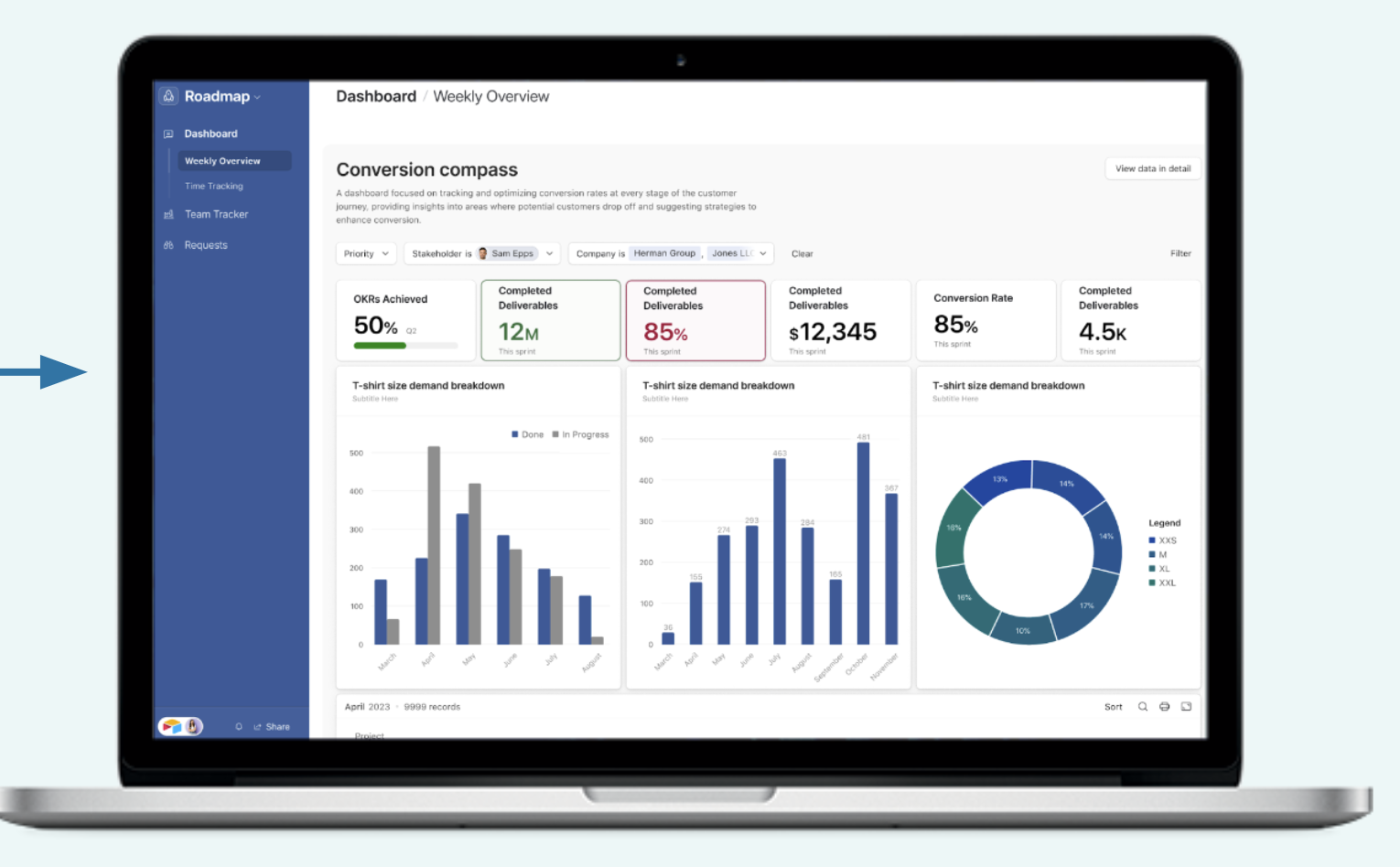
Airtable looks like a spreadsheet but acts like a database, making it perfect for marketing teams needing structure, not software bloat. You can build custom content calendars, assign owners, track deadlines, and even manage assets, all within one interface.
Pro Tip
Pair Airtable with Jotform to instantly sync submitted forms into your content pipeline — ideal for guest post pitches, briefs, or creative requests
Editors, writers, and content managers can switch between grid, calendar, kanban, or gallery views to stay on top of what’s going out, when, and by whom.
Key features:
- Grid, calendar, gallery, and kanban views for any workflow
- Linked records and relational tables to eliminate duplicate data
- Powerful automation builder with triggers, conditions, and actions
- AI assistant to help summarize, tag, and structure data
Pros:
- Airtable’s code-free flexibility makes it ideal for custom editorial pipelines, campaign planning, and asset management.
- The free plan is surprisingly powerful, especially for solo creators or lean teams building their first real system.
Cons:
- Powerful automation and storage features are gated behind higher-tier plans.
- The learning curve is real, especially if you’re not used to database logic or low-code tools.
Plans/Pricing:
Free with 1,000 records; paid plans from $20 per user per month with advanced features.
G2 rating: 4.6/5
4. Loomly: Best for collaborative social calendars
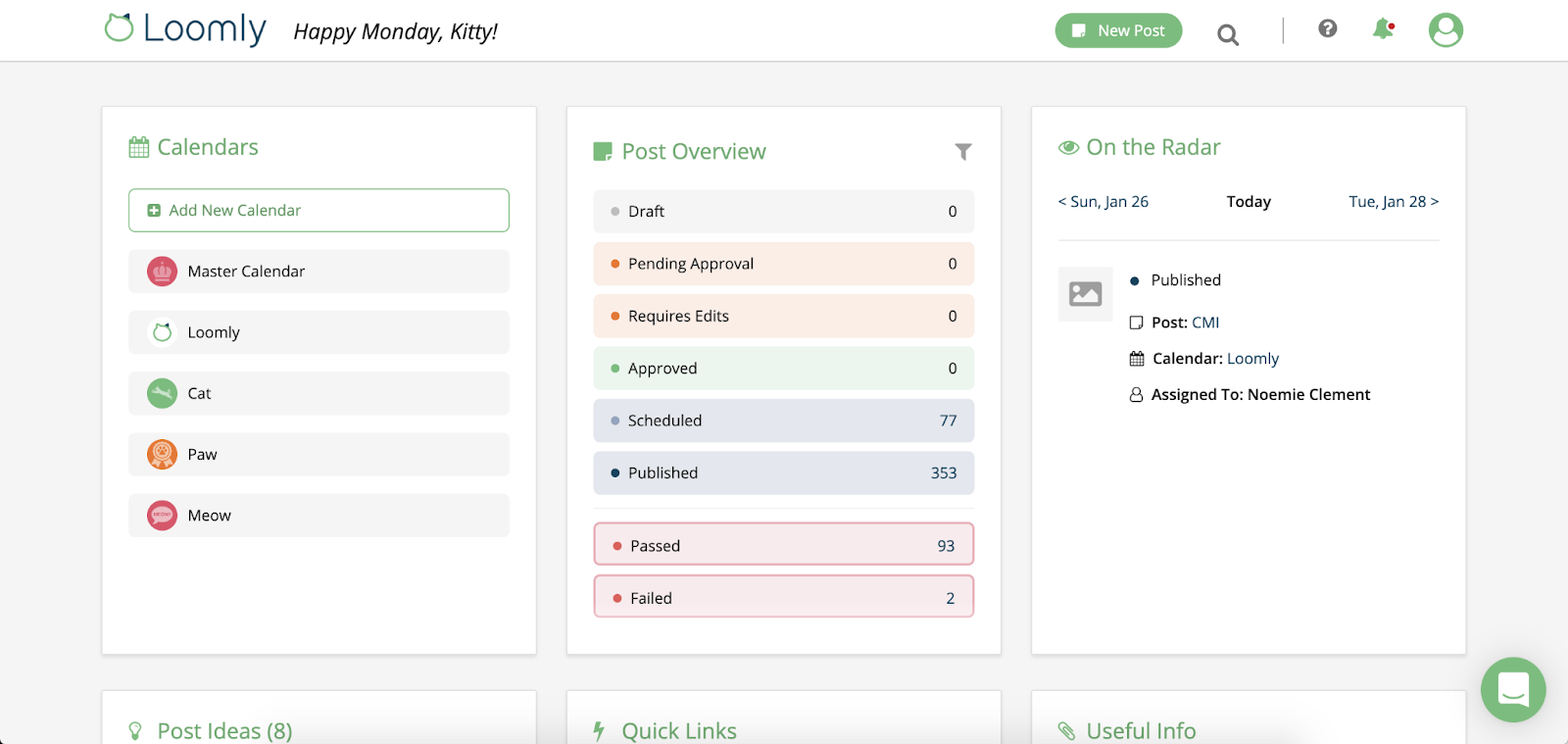
Loomly gives you mock-ups, comment threads, approvals, and milestones, so everyone stays aligned. You oversee content creation, editing, and publishing workflows without losing sight of the calendar.
You get a visual content calendar, content previews per platform, approval streams, and user roles for collaboration, plus basic analytics and post ideas that will spark your creativity.
Pro Tip
With Jotform’s Loomly integration, you feed campaign requests or social asset submissions straight into Loomly, meaning your designers, freelancers, or clients can send materials through a form, and they’ll land in your calendar without the back-and-forth.
Key features:
- Visual calendar and content mock-ups so you can preview posts per platform before publishing
- Approval workflows, user roles, draft reviews, and collaboration comments
- Content ideas, saved hashtag groups, templates, built-in post ideas to jumpstart planning
Pros:
- The built-in inspiration tools, like hashtag libraries and post ideas, save time when you’re stuck on content planning.
- The interface is straightforward enough that even non-marketers can jump in and contribute.
Cons:
- Loomly’s analytics are decent but not as deep or customizable compared to tools built for heavy data or reporting.
- Pricing ramps up quickly as you add users and accounts, potentially putting it out of reach for smaller teams.
Plans/Pricing:
Base from $32 per month (billed annually) for two users; paid plans scale up to $277 per month with more accounts, analytics, and collaboration.
G2 rating: 4.6/5
5. Hootsuite: Best for teams scaling their social presence
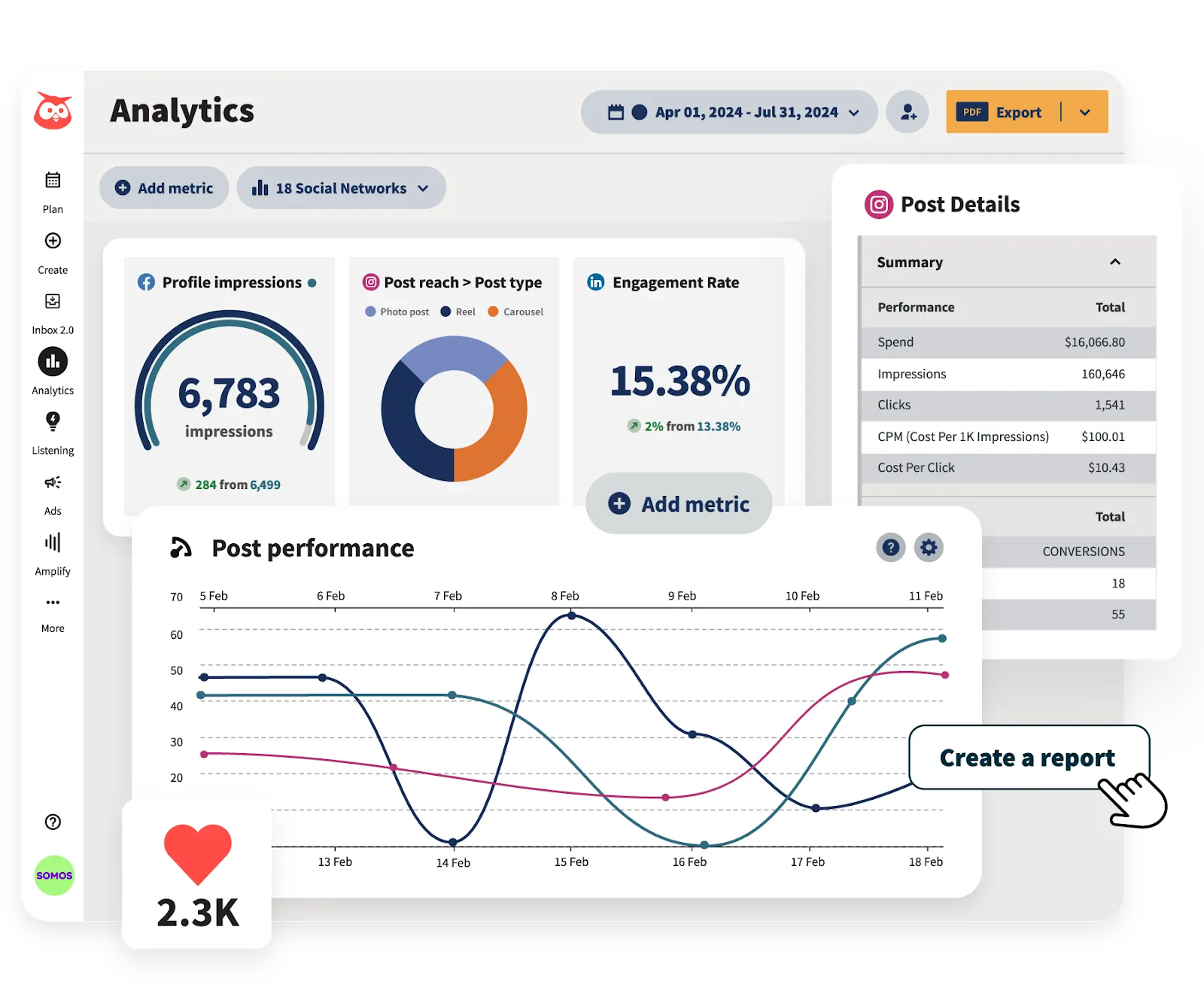
Hootsuite provides performance metrics, details on the best times to post on each platform based on audience insights, and the ability for your whole team to collaborate on social media marketing.
You get Best Time to Publish heatmaps that use your last 30 days of engagement to suggest optimal posting slots. There’s also a shared inbox for messages and mentions, scheduling via CSV upload or bulk tools, and options for workflow approvals and role-based permissions as you scale.
Key features:
- Bulk scheduling (CSV uploads) and content calendar and planner tools
- Analytics including post performance, sentiment, industry benchmarks, and exportable reports
- Team collaboration including roles and permissions, approvals, and user access controls
Pros:
- Hootsuite helps you nail posting timing by using your own data to recommend when your audience is most engaged.
- Collaboration is baked in — bulk uploads, approvals, and team roles make it easier to scale.
Cons:
- The cost is high: Features you really want (extras, seats, social profiles) are often available only with higher-tier plans.
- With so many features, the interface can get cluttered; it takes time to learn where everything lives and set things up cleanly.
Plans/Pricing:
Standard from $99 per user per month for five accounts.
G2 rating: 4.3/5
If Hootsuite’s pricing makes you sweat, you’ll want this list of Hootsuite alternatives that don’t.
6. monday.com: Best for visual, low-code project management
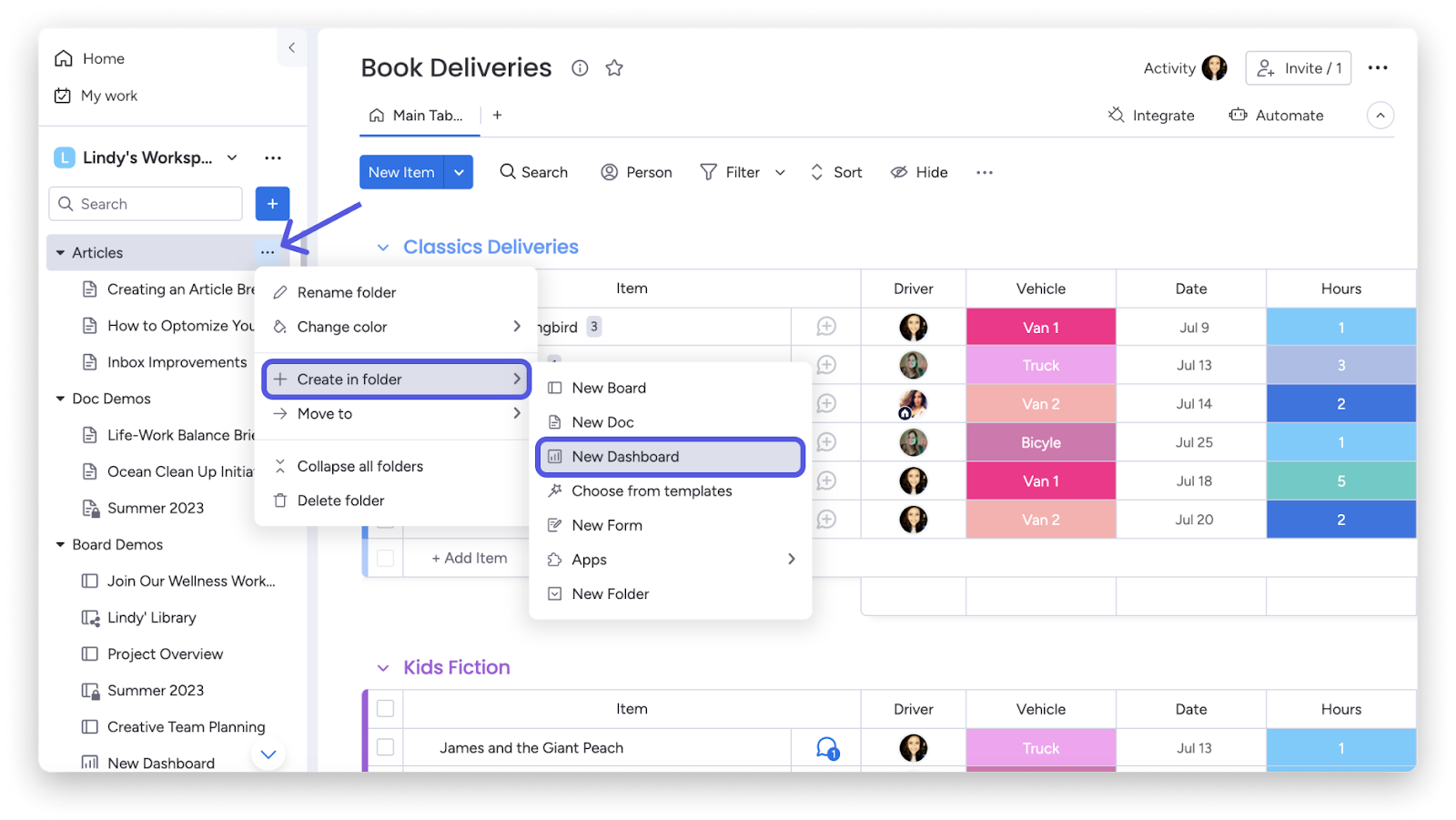
monday.com’s interface is incredibly easy to navigate, and it guides you through workflows step by step.
Use templates for campaign planning, social media calendars, or tracking video production. Views like Calendar, Timeline, Gantt, and Kanban help you see work at a glance. Automations reduce manual tasks, and popular integrations let you plug in tools you already use.
Key features:
- 200-plus workflow templates, including dedicated social media and campaign trackers
- Automations builder with triggers and actions to cut repetitive work
- 70-plus native integrations (Slack, Google Drive, Mailchimp, etc.)
- Dashboards that consolidate data from multiple boards into one view
- Role-based permissions and guest access for external collaborators
Pros:
- monday.com offers a ton of templates and board types, meaning teams can spin up campaign-planning, social-content, or video workflows quickly.
- Automations save hours of manual updates by handling repetitive tasks like assigning owners, moving items between boards, or pinging teammates.
Cons:
- Costs scale quickly as you add users, automations, and integrations.
- Lower tiers feel stripped-down; if you’re running more than a simple task list, the Free or Basic plan won’t cut it.
Plans/Pricing:
Free for two seats; paid plans from $9 per user per month (billed annually) with unlimited boards, advanced views, automations, and enterprise options.
G2 rating: 4.7/5
Pro Tip
If your calendar is still a Google Sheet taped together with color codes, do yourself a favor: Here’s how to make a social media calendar that works.
7. Zoho Social: Best for budget-friendly multi-brand monitoring
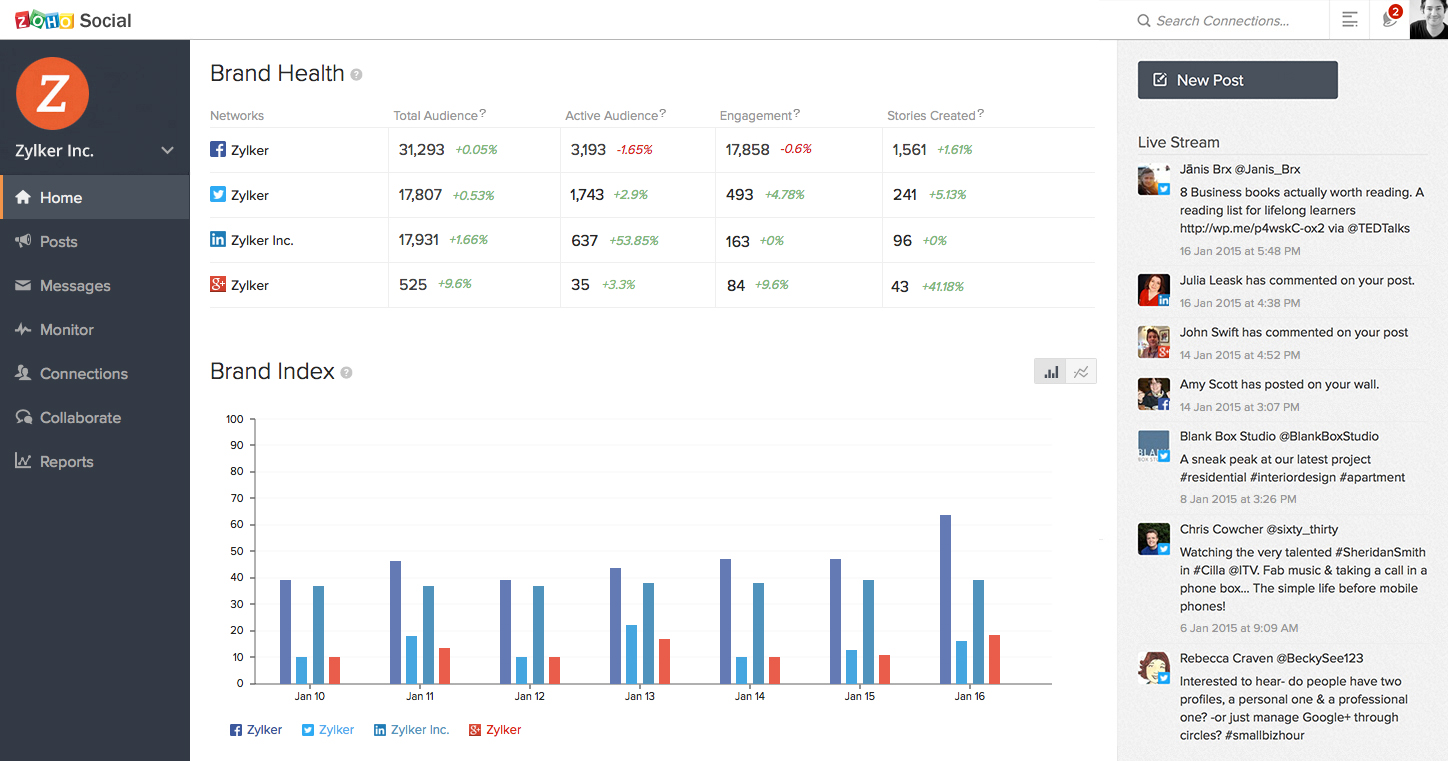
Zoho Social gives you scheduling, monitoring, and engagement tools without sticker shock.
You get real-time feeds for comments, visitor posts, and mentions, as well as Facebook Lead Ads and Forms sync, trend tracking, repeat posts, and workspaces for different brands. The interface stays relatively simple even as you scale from just you to you plus a few users and clients.
Key features:
- Social channel monitoring (keywords, hashtags, visitor posts, mentions)
- Facebook Lead Ads and Forms integration (auto-import leads)
- Publishing calendar and scheduling options, including repeating posts
- Content and draft management, plus multiple brands and workspaces per account
- Reports and analytics, including post performance, audience engagement, and exportable summaries
Pros:
- Zoho Social gives you decent monitoring and engagement tools at price points far lower than many enterprise offerings.
- The ability to sync ad leads and forms and manage multiple brands means it scales nicely for small agencies without forcing you into premium tiers immediately.
Cons:
- The free plan covers only one brand and one user, so freelancers can get by, but any team will need to upgrade almost immediately.
- Reporting is functional but not as customizable as Hootsuite or Sprout Social; you can export reports, but building highly tailored dashboards isn’t an option on lower tiers.
Plans/Pricing:
Free for one brand (six channels); paid plans from $10 per brand per month (billed annually) with advanced scheduling, reporting, and agency options.
G2 rating: 4.6/5
8. Kontentino: Best for high-volume content with fast sign-offs
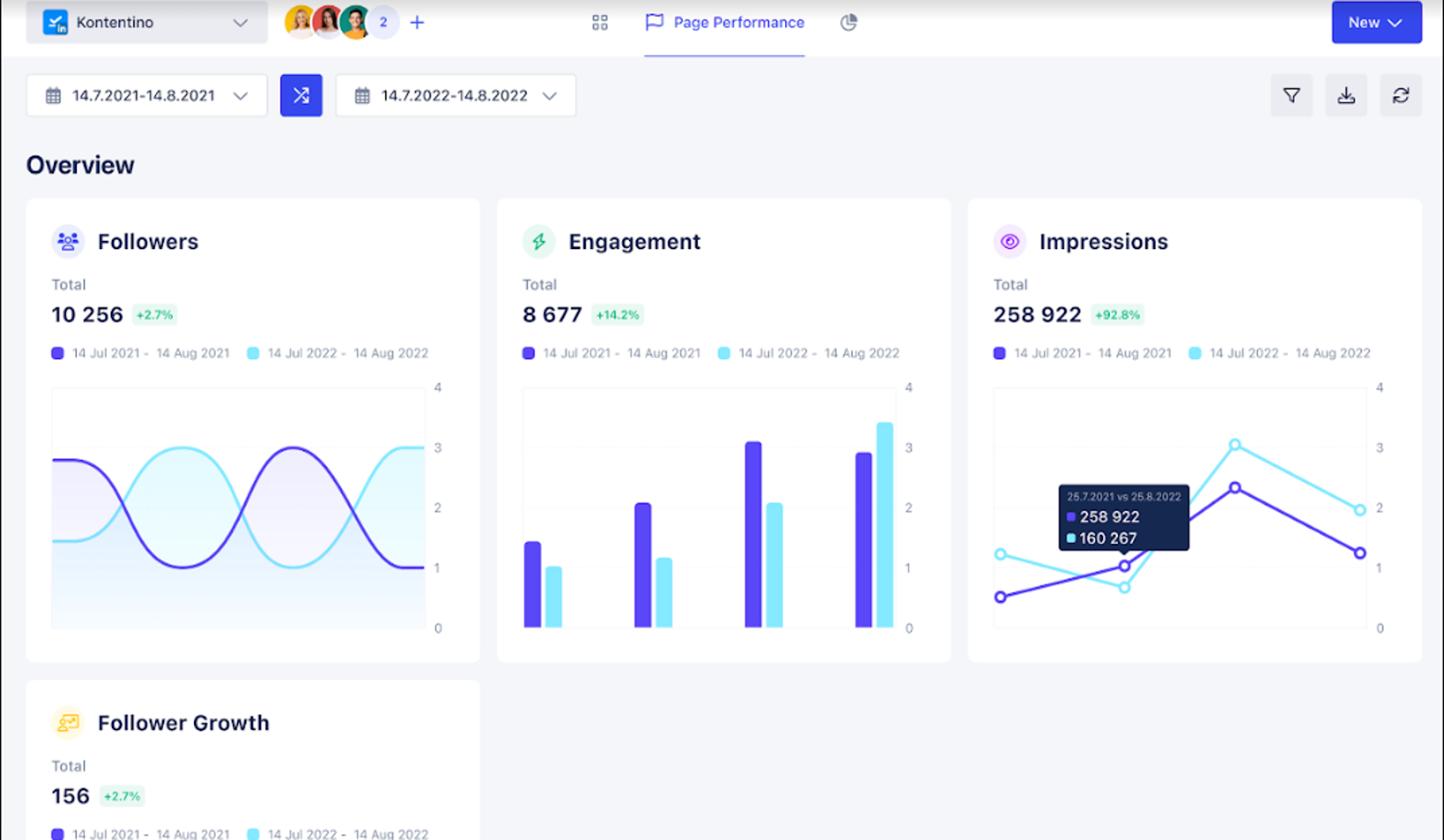
Kontentino’s workflow tools, live previews, and media storage align everyone on your team, especially when you’re managing multiple clients, designers, or profiles.
From the drag-and-drop calendar to post previews on different platforms, task assignment, approvals, “time savers” bulk actions, and AI features for ideas and captions, Kontentino gives you a polished toolkit for content operations.
Key features:
- Approval workflows, client and stakeholder review tools, and clear status tracking
- AI content tools, including caption generation, hashtag suggestions, post ideas, creative prompts
- Time-savers include the capability to bulk-schedule, change statuses without opening each post, and assign multiple tasks at once
- Media library, unlimited storage (depending on plan), image and video thumbnail tools, link shorteners, and UTM builder
Pros:
- Kontentino makes approvals and feedback clean: Clients and/or designers see what a post will look like, can comment, and request edits, all within the tool.
- The AI-powered idea tools and time-saver bulk actions save hours of repetitive work.
Cons:
- The mobile app functionality isn’t on par with the desktop experience; you can review and comment, but advanced scheduling and editing are clunky.
- The lower-tier plans cap profiles, posts, and users pretty tightly.
Plans/Pricing:
Basic from $39 per month for two users.
G2 rating: 4.8/5
9. SocialPilot: Best for high-volume posting plus client-ready analytics
SocialPilot is built for teams and agencies that need to manage many social profiles, automate bulk content drops, and keep things organized.
It lets you schedule up to 500 posts at once via CSV/text (“Bulk Scheduling”), manage dozens of social profiles from one dashboard, and review comments and messages across those accounts.
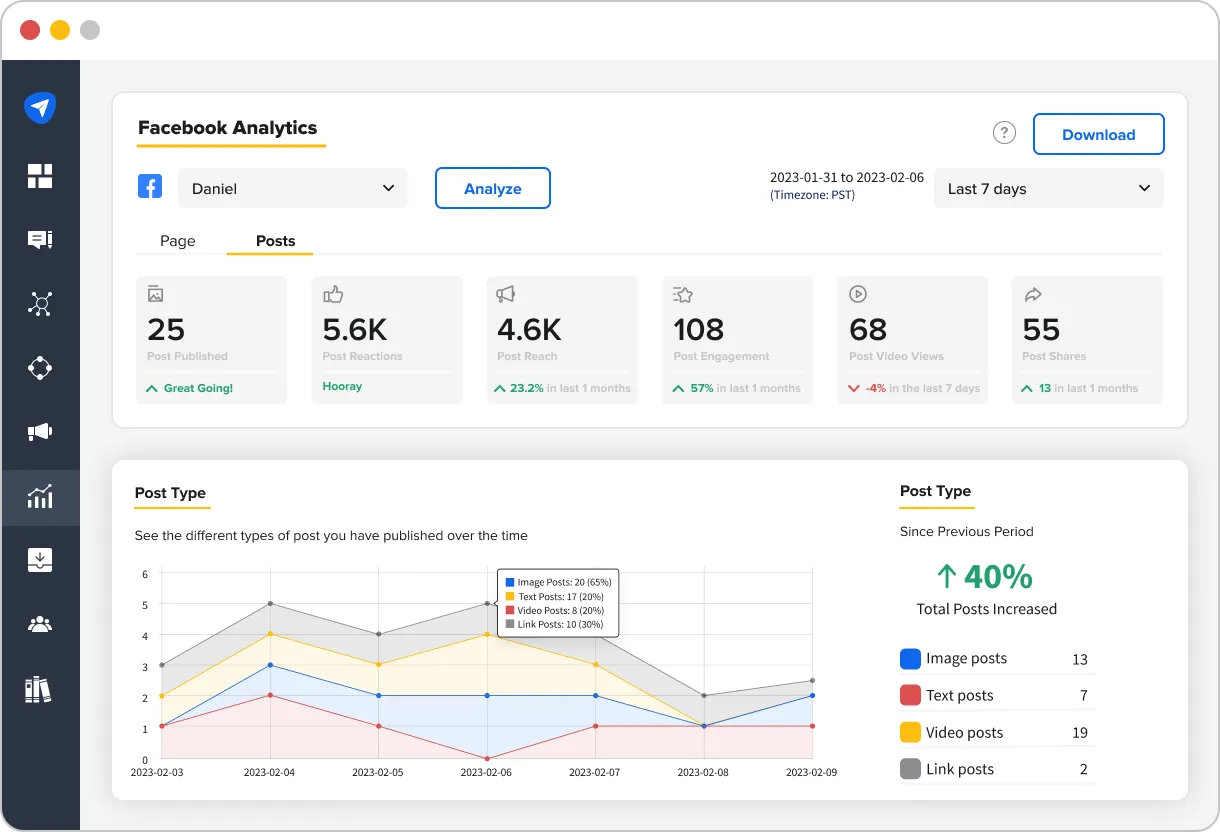
Key features:
- Team management features include assigning tasks, user roles, collaboration tools, and client access (e.g., “Approvals on the Go”)
- Content library, post previews, visual calendar and queue view
- AI Pilot helps with content and hashtag suggestions, reposting, and evergreen content management, etc.
Pros:
- SocialPilot lets you dump hundreds of posts in at once, which is a godsend when you’re managing many clients or recurring content calendars.
- The software offers a good balance between features and price; teams get serious scheduling, client-level collaboration, and analytic tools without the highest-end cost.
Cons:
- The Instagram integration is weak; stories, performance tracking, or “see more” previews often misbehave or aren’t supported fully.
- Performance issues crop up in bulk scheduling or when juggling dozens of profiles.
Pro Tip
Offset SocialPilot’s Instagram weakness. Use Jotform’s Instagram Agent that triggers replies based on follower count, time windows, or user behavior, and delivers context-aware responses using your knowledge base or AI suggestions. Our free-to-use agent also keeps your IG connection secure while monitoring DMs. And all of it feeds into Jotform AI for unified management and conversation tracking.
Pricing:
Essentials from $30 per month (billed annually) for one user; Standard at $50 and Premium at $100 add more profiles, users, and advanced reporting.
G2 rating: 4.5/5
10. Agorapulse: Best for growing brands that want top-tier analytics
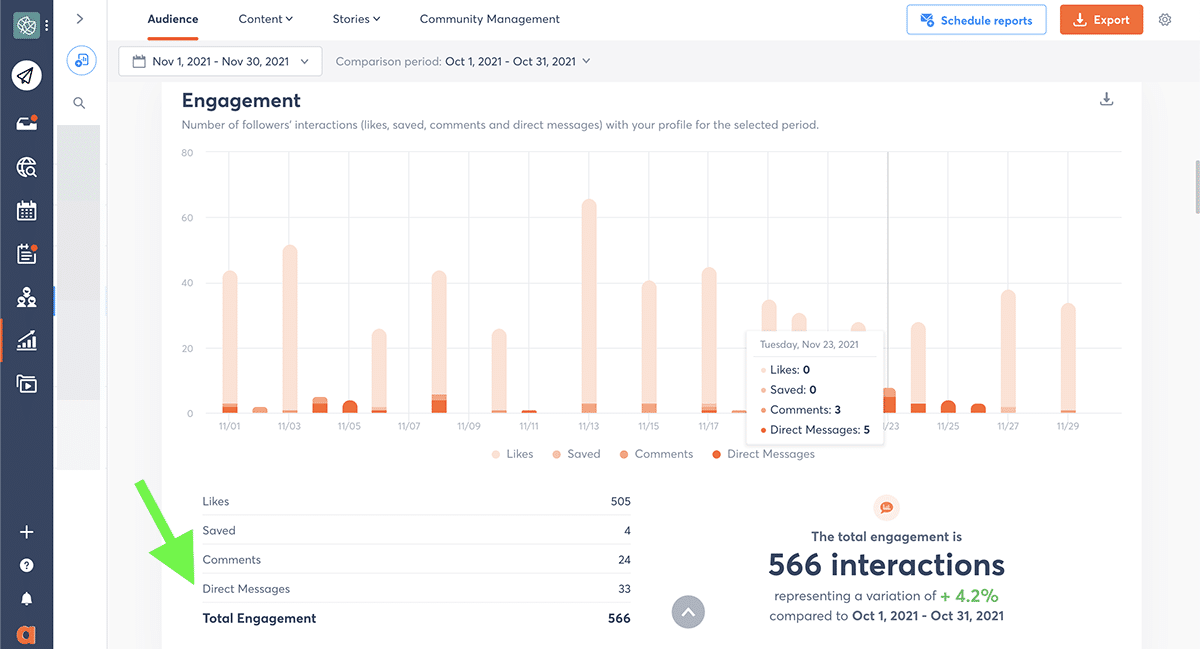
Agorapulse gives you a smooth, unified inbox, deep reporting, and solid workflows. It’s perfect if you need a tool that scales with client work, multiple accounts, or high engagement.
You can manage comments, DMs, ad reactions, mentions, and analytics all from one dashboard, and you can present clean, client-ready reports without stitching tools together.
Key features:
- Unified Social Inbox that consolidates messages, comments, ad replies, and mentions from all connected profiles
- Strong reporting and analytics, including custom reports, exportable dashboards, and tracking social media ROI (with Google Analytics integration)
- Bulk scheduling and content queue support, post previews, saved hashtags, and content library
- Multi-user and team workflows, including roles, approvals, shared calendars, and workspace switching
- Social listening and monitoring, including tracking keywords, hashtags, competitor mentions, etc.
Pro Tip
Reporting is where most tools overpromise. If you’re serious about data, bookmark this roundup of the best social media analytics tools before you open your wallet.
Pros:
- The reporting tools are very polished, so you can generate professional, branded insights without a designer or pulling reports from several tools.
- You can queue up content across multiple platforms with ease and see previews to avoid layout or formatting surprises.
Cons:
- The top features (bulk publishing, advanced ROI, more profiles) require moving into higher-tier plans, which are pricey for smaller teams or solopreneurs.
- Some features (bulk uploads, advanced editing, or approvals) are harder to use or missing on mobile.
Plans/Pricing:
Standard from $79 per user per month (billed annually).
G2 rating: 4.5/5
11. Sendible: Best for creators who want AI help and unlimited scheduling
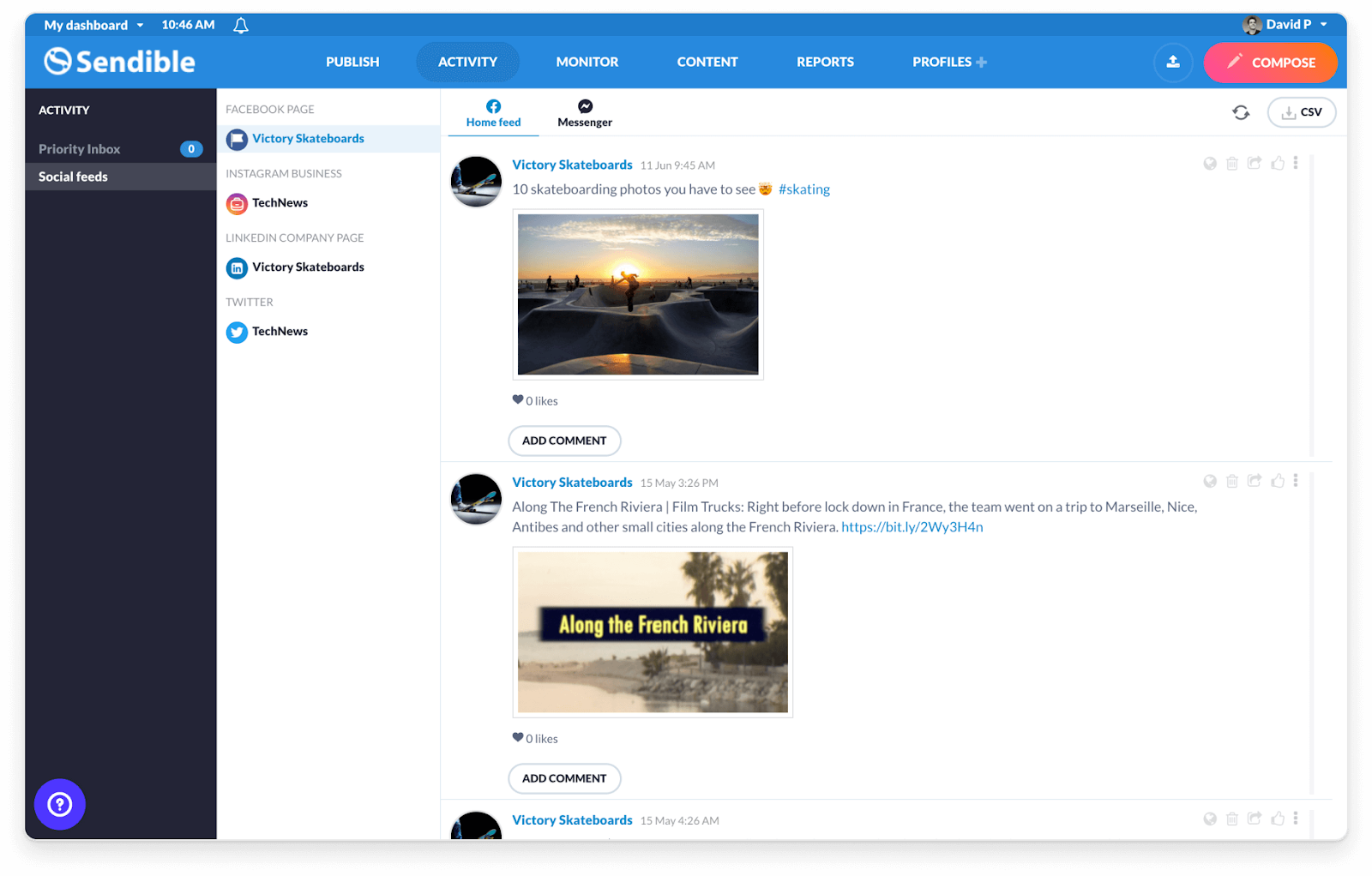
Sendible is made for you if you juggle multiple profiles, clients, or content themes and you need reliable publishing, engagement tracking, and collaborative feedback — but without reinventing the wheel.
With Sendible, you get a unified priority inbox, bulk scheduling (CSV, queues), content idea tools (RSS, holiday calendar), and a decent set of integrations (Canva, Pexels etc.).
Key features:
- Shared Priority Inbox that centralizes comments, mentions, and DMs from multiple profiles
- Collaboration tools include client dashboards, team member assignments, post and inbox assignments, and approval workflows
- Content idea tools like RSS feed suggestions, holiday calendar, and post templates
- Reporting and dashboards feature post performance analytics, exportable reports, and team performance metrics
Pros:
- The client-friendly tools (dashboards, approval flows, branded reports) make it easier to share work with external stakeholders without exposing messy backend details.
- Sendible’s bulk scheduling and smart queue features mean you can load up content in advance.
Cons:
- Some integrations (cloud storage like Dropbox, Google Drive) or collaboration (detailed permissions) are restricted in lower-cost plans.
- Video uploads can fail or crash occasionally when scheduling large files, which is frustrating when you’re prepping content in bulk.
Plans/Pricing:
Creator from $25 per month (billed annually) for one user and six profiles; higher plans ($76–$638) add more users, profiles, reports, collaboration, and enterprise features.
G2 rating: 4.5/5
12. Later: Best for brands that care about a polished feed layout
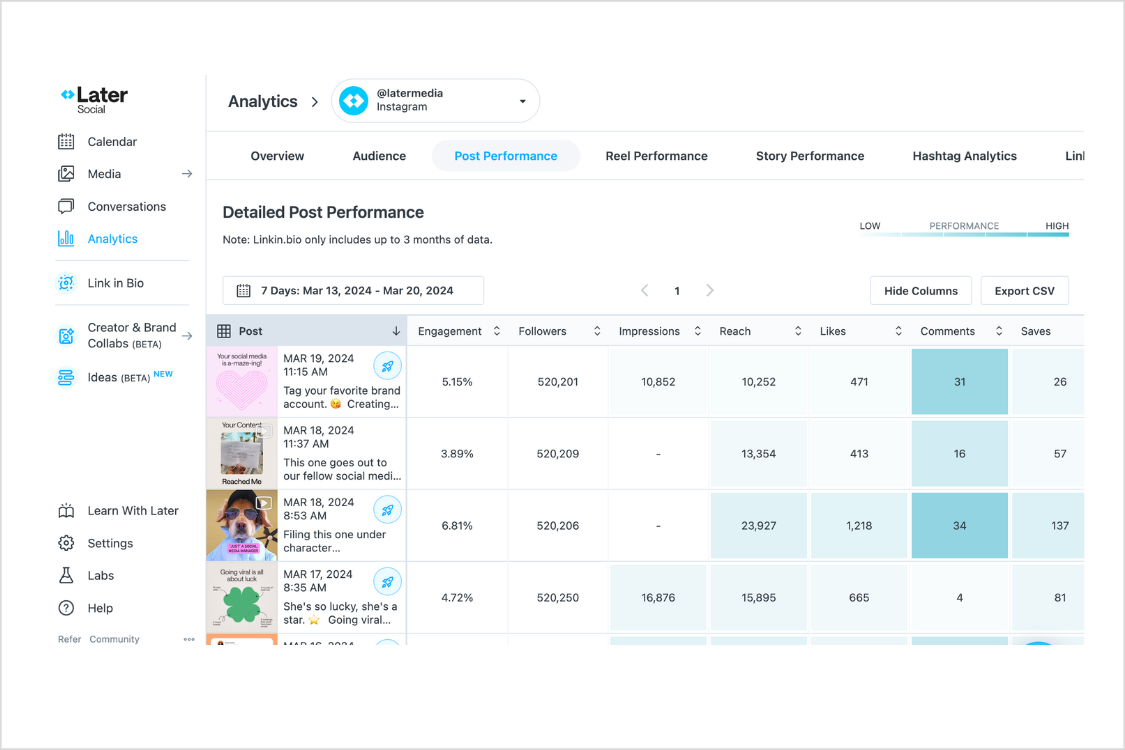
Later is made for people who want clean, visual planning tools and posts that look great before they go live. It’s ideal if your content strategy leans on Instagram (or another visuals-heavy channel), you need a solid media library, and you hate surprises when you schedule — a real “what you see is what you’ll post” vibe.
You get drag-and-drop calendar views, a preview of how your feed will look, batch image uploads, media organization tools, and built-in AI for captions and hashtag suggestions.
Key features:
- Built-in AI tools, including caption suggestions, hashtag helpers, and generative content assists
- Multiple social “sets” (one profile per platform in each set), so managing multiple brands is more organized
- Social inbox and team collaboration including approval workflows on Growth and higher-tier plans
Pros:
- Later’s visual layout and feed preview make it way easier to keep your branding consistent.
- The media library and AI caption and hashtag helpers mean less time fiddling with captions or digging up assets; good for batch content creation.
Cons:
- Lower plans are tight; limited number of posts per profile, fewer social sets, and no access to advanced analytics or team-approval features.
- Instagram is the strongest focus, so support for other platforms sometimes lags (e.g., TikTok, YouTube Shorts).
Plans/Pricing:
Starter from $18.75 per month (billed annually) for one user and eight profiles. Extras at $10 per month per additional Social Set; $3.33 per month per extra user; $3.33 per month per 100 AI credits.
G2 rating: 4.5/5
Which CoSchedule alternative is right for you?
Twelve options is a lot. Here’s how to match the right tool to the way you work:
- If you’re flying solo or running lean: Stick with Buffer or Later.
- If you’re managing clients or juggling multiple brands: Look at Sendible, SocialPilot, or Agorapulse.
- If you’re running a bigger ship: Sprout Social, Hootsuite, and monday.com are built for enterprise teams who need deep reporting, permissions, and automation at scale.
- If you’re not sure if you’re calendar-centric or social-centric: Airtable or monday.com are your fix.
Remember that a calendar won’t chase down briefs for you though — that’s where Jotform comes in.
Use form templates to collect campaign requests, Workflows to autoroute approvals, and integrations to push everything where it belongs. Jotform connects natively with Airtable, monday.com, Zoho Social, Buffer, Hootsuite — and through Zapier or API, just about everywhere else.








Send Comment: